Short answer: paint is the hardest thing in a real-time car configurator because it isn't one colour. It's a base coat, a layer of flake and a clear coat, and each one behaves differently as the light changes. Get the layers right and a buyer trusts the whole car. Get one wrong and the car looks like a toy, even if every panel is perfect.
I've built a few independent concept configurators in Unreal Engine 5 now. The bodywork takes weeks. But the thing people react to first, every time, is the paint. And it's the thing I've redone the most.
What is car paint actually made of?
Real car paint is a stack of layers, and a 3D car configurator has to fake every one of them in real time.
| Layer | What it does in real life | What goes wrong on screen |
|---|---|---|
| Base coat | The actual colour | Too bright or too flat, so the colour looks printed on |
| Flake (metallic or glass) | Tiny flakes that catch light and sparkle | Flake too big, too even, or it shimmers when the camera moves |
| Clear coat | A glossy layer on top that holds the reflections | Missing, so the car looks like plastic. Too strong, so it looks wet |
| Finish (gloss or satin) | How sharp the reflections are | Satin that reads as dull grey, or gloss that reads as chrome |
The clear coat matters more than people think. It's why a real car shows a sharp reflection of the sky on top of a soft metallic glow underneath. Two reflections at once. If you only build one, the eye knows something's off.
Why does the same paint look different in every light?
Because paint is mostly reflection, and reflection depends on what's around the car. A paint that looks perfect in a white studio can look wrong on a mountain road an hour later.
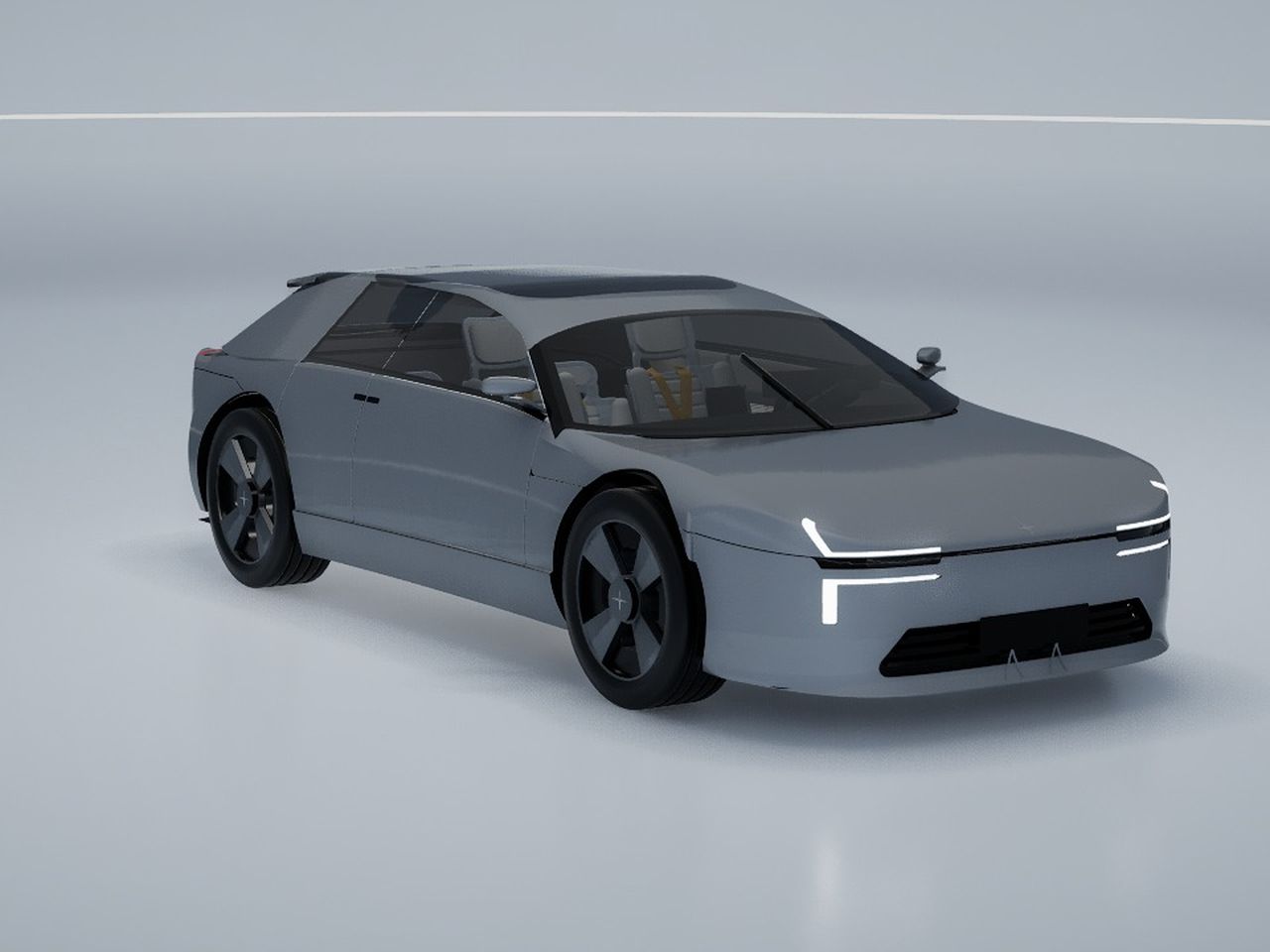
The best example I have is the Polestar Formula 2030. Its paint is called Nitrogen, a pale cool silver. In the studio press photos it looks soft, almost satin. In the outdoor photos it looks glossier. Same car, same paint.
My first instinct was to pick one photo and match it. That would have been wrong in every other light. So the note in my build file now just says: don't judge the finish from one photo. I set up two lookdev scenes, a pale studio and a hazy outdoor overlook, and the paint has to look right in both before it ships.
What was the hardest paint mistake we made?
On the Polestar Formula 2030 the photos fooled me. The side cladding, the splitter, the diffuser and the wheels all read as black in the press photos. They aren't. The press release says they're Nitrogen, tone in tone with the body.
If I'd trusted my eyes, the car would have had black trim it never had. Anyone who knew the car would have spotted it in a second. Now the rule is simple: read the press release before you trust the photos. Paint names, finishes, which parts are body colour. The words beat the pixels.
Why is satin paint so hard?
Satin sits in a narrow band between gloss and matt. Push it one way and it looks like cheap plastic. Push it the other way and it's just gloss with the contrast turned down.
The Jaguar Type 01 has both kinds. Iconic Black is gloss, a deep metallic black with fine silver sparkle. Mesmerising Copper and Modernist Blue are satin, and Jaguar's press release describes Visionary Silver Satin as evoking anodised metal. The copper has a coarse flake under a soft finish, so it has to sparkle and glow at the same time. That's two things that fight each other.
What helped was treating the finish as its own decision, not a slider at the end. Same base colour, same flake, and only the top layer changes between satin and gloss. When the buyer switches, they see the finish change, not a different car.
Why do dark paints go flat in shade?
A black car is almost all reflection. There's very little colour to look at, so in shade a weak black turns into a silhouette. You lose the shoulder line, the door creases, the whole shape.
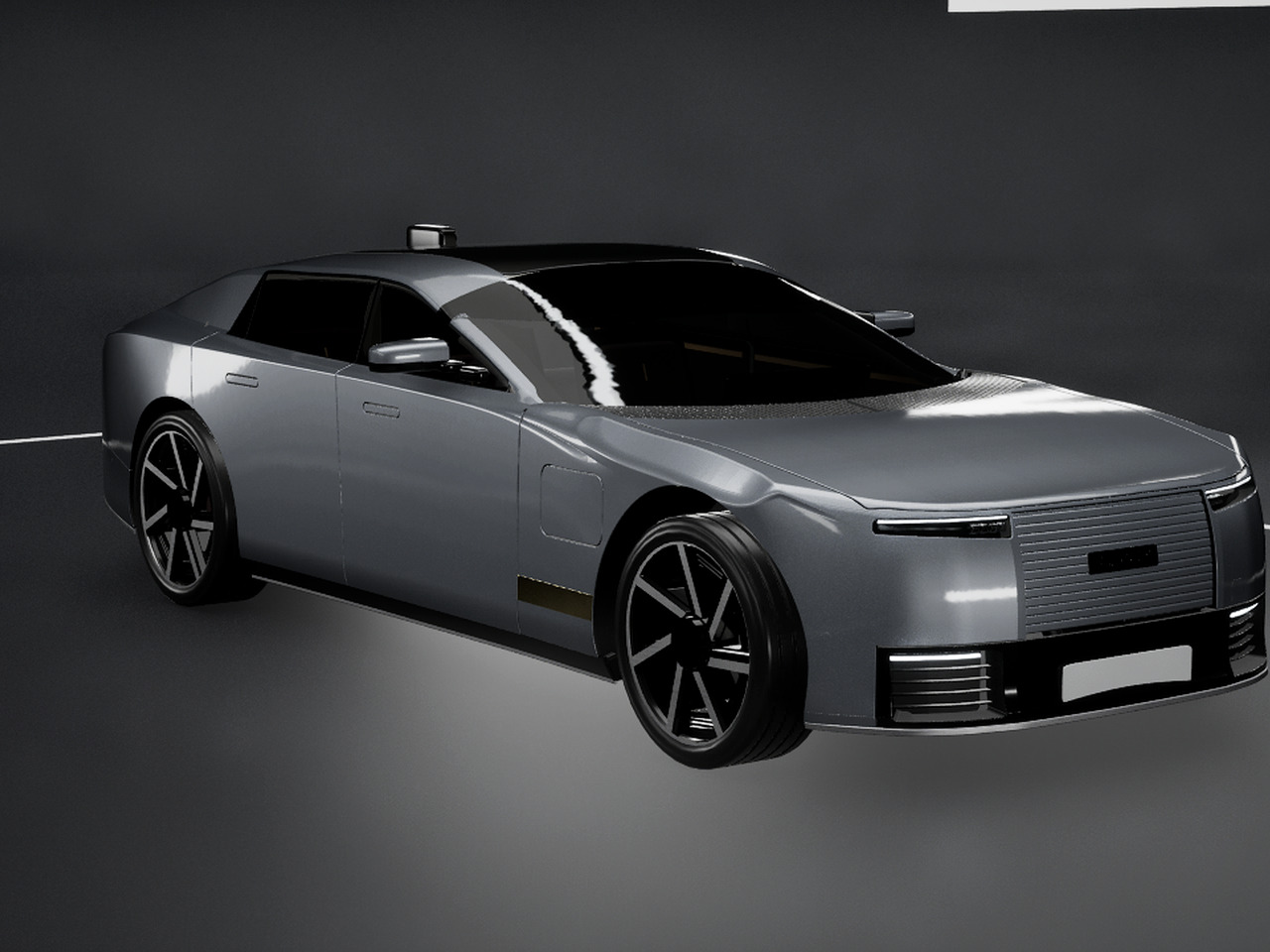
On the Brabus Bodo I check black in a dark studio and then on a beach at night. If the black doesn't change with the light, it's wrong. What keeps the shape readable is the clear coat picking up whatever light there is, and the flake staying quiet until a highlight hits it. Too much flake and a black car looks like glitter. Too little and it's a hole in the screen.
How do we check paint now?
Every paint on every build goes through the same short list before it's allowed in the online car configurator:
- Read the brand's own words first. Paint name, finish, which parts are body colour.
- Match more than one photo. At least one studio shot and one outdoor shot.
- Two lights minimum. A studio and an outdoor scene, day and night where the build has them.
- Orbit slowly. Flake that shimmers or crawls when the camera moves gets fixed, even if the stills look fine.
- Check the dark paints in shade. If the body lines disappear, the clear coat is wrong.
- Switch finishes side by side. Satin and gloss of the same colour, so the only change is the top layer.
None of it is clever. It's just looking at the car the way a buyer will, in more than one light, for longer than feels necessary.
Why does paint matter so much in a real-time car configurator?
Paint is a personal choice, and it's the one people keep changing their mind about. In an Unreal Engine car configurator they can turn the car, move it from the studio to the street, and watch their colour change with the light. That's the closest thing to standing next to the car. If the paint is wrong there, nothing else on the page will save it.
These are independent concepts, not affiliated with or endorsed by the brands. If you'd like to see the paints move in real light, the live session below is the easiest way.